
Volcanoes National Park
Rwanda Gorillas, Golden Monkey
Volcanoes National Park is Rwanda’s most famous national park and one of the best places in Africa to see endangered mountain gorillas in the wild. The park is located in the north-western part of Rwanda, near Musanze town, and borders Uganda’s Mgahinga Gorilla National Park and DR Congo’s Virunga National Park.
The park spans approximately 160 square kilometres and is part of the Virunga Mountain range, comprising eight volcanic mountains. Five of these volcanoes are found within Rwanda, creating a dramatic landscape of misty forests, bamboo zones, and afro-alpine vegetation.
Volcanoes National Park is best known for gorilla trekking, but it also offers golden monkey tracking, birding, nature walks, cultural encounters, and scenic hiking experiences. It is also the park where Dian Fossey, the famous primatologist, carried out her groundbreaking gorilla conservation work.
Gorillas in Volcanoes National Park
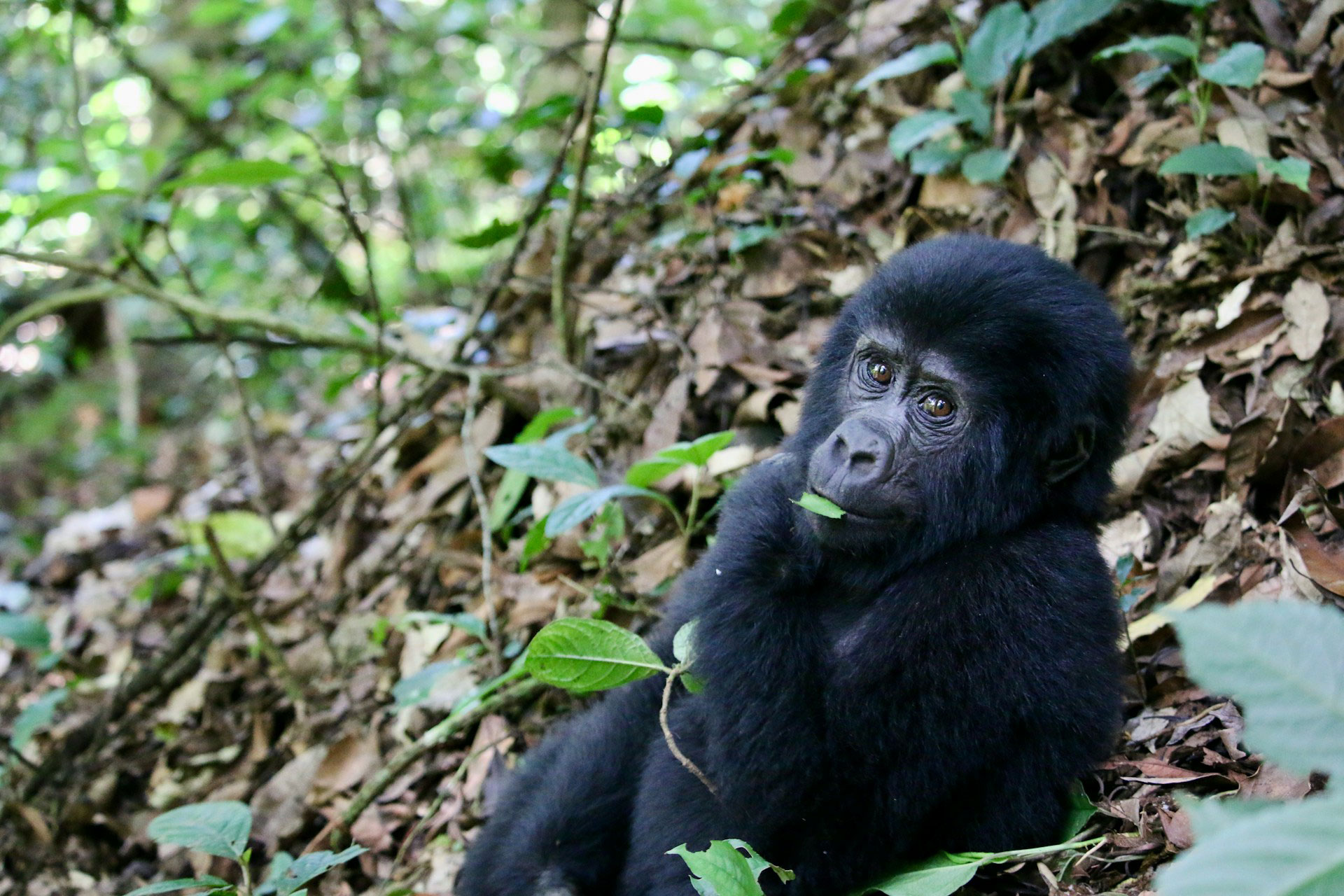
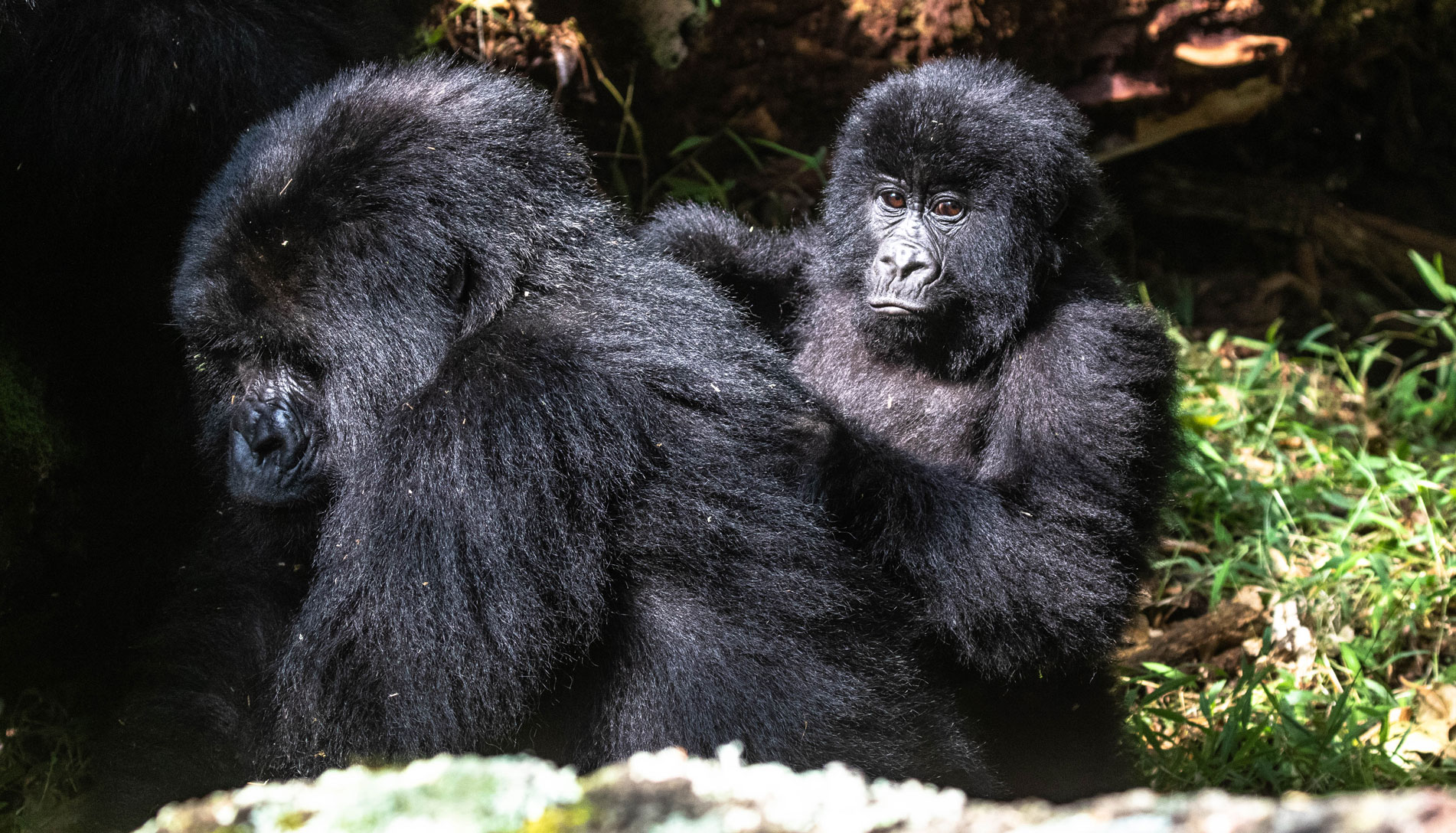
Volcanoes National Park is home to a large population of endangered mountain gorillas, one of the rarest primates on earth. These gorillas live in family groups and move freely across the Virunga Mountains between Rwanda, Uganda, and DR Congo.
Mountain gorillas here are known for:
- Thick black fur that protects them from cold mountain weather
- Strong social bonds within families
- Gentle behaviour despite their large size
Gorilla trekking in Volcanoes National Park allows visitors to hike through dense forests with professional guides and trackers until they find a gorilla family. Once found, visitors spend one unforgettable hour observing the gorillas as they feed, play, groom, and rest.
The experience is strictly controlled to protect the gorillas. Only a limited number of visitors are allowed per group per day, making it exclusive and conservation-focused.
Gorilla Groups in Volcanoes National Park
Volcanoes National Park has several habituated gorilla families that are open to visitors for trekking. Each group has its own size, behaviour, and territory.
Some well-known gorilla families include:
Susa Group
One of the largest and most famous groups, once studied by Dian Fossey. It has many members and is known for playful juveniles and scenic trekking routes.
Sabyinyo Group
A calm and stable group located near the park edge, making it suitable for visitors who prefer shorter hikes.
Amahoro Group
Known for being peaceful and gentle. Treks to this group are longer but rewarding, with beautiful forest scenery.
Agashya Group
Originally wild, this group was moved closer to the park headquarters for protection. It is now well habituated.
Bwenge and Kwitonda Groups
These groups are found in higher altitudes and may require more challenging hikes, ideal for adventurous trekkers.
Each gorilla group is led by a dominant silverback, who protects the family and makes decisions for the group.
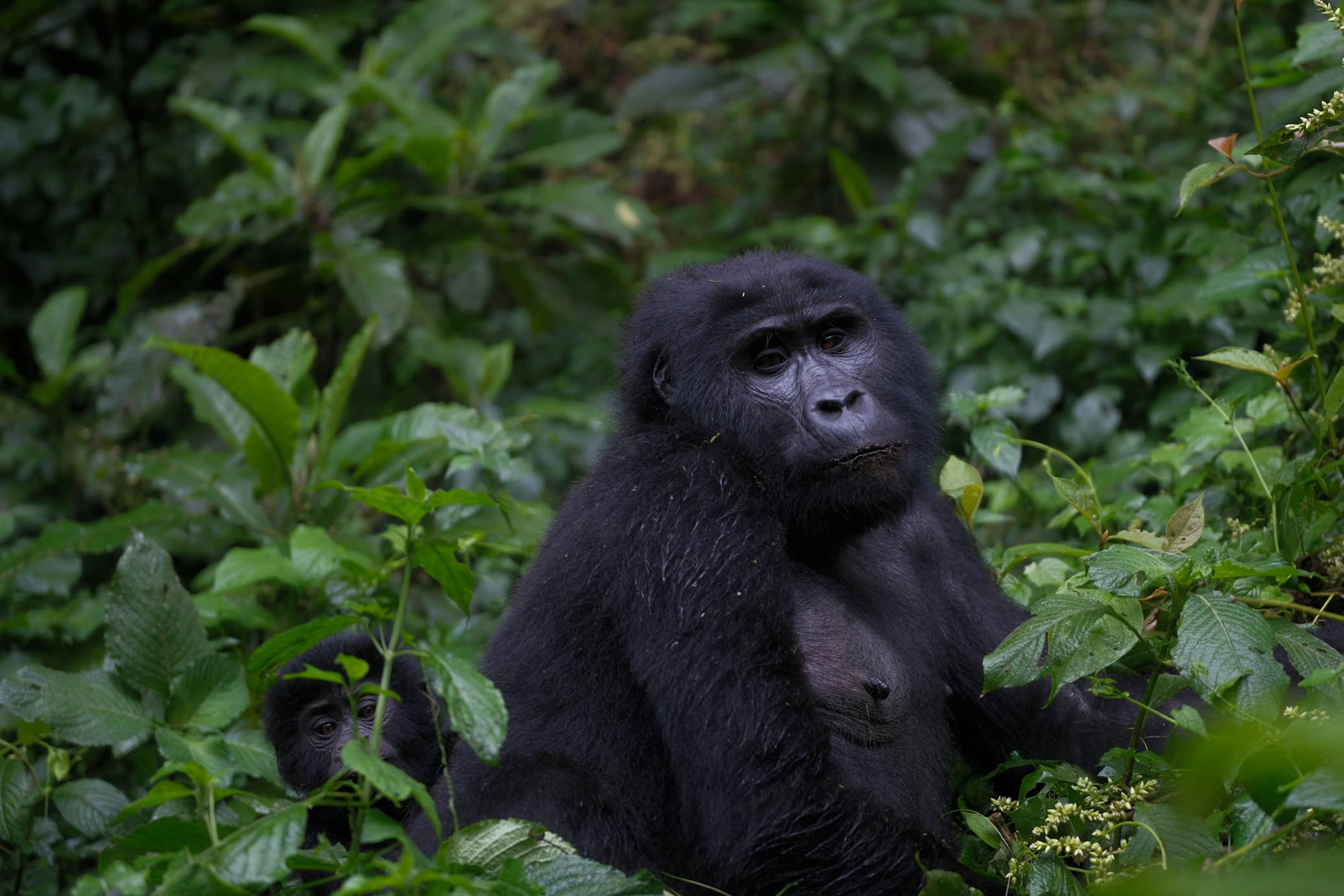
Gorilla in Volcanoes Gorilla National Park - Rwanda
Golden Monkeys in Volcanoes National Park
Golden monkeys are one of the most exciting and colourful wildlife species found in Volcanoes National Park, Rwanda. While the park is best known for mountain gorilla trekking, it is also one of the very few places in the world where visitors can see these rare and beautiful primates in their natural habitat. Golden monkeys are endemic to the Virunga Conservation Area, meaning they are found nowhere else on Earth.
What Makes Golden Monkeys Special
Golden monkeys are smaller than gorillas and are known for their bright golden-orange fur, especially on their backs, sides, and tails. This striking colour stands out beautifully against the green bamboo forests where they live. Their faces are darker, with expressive eyes that make them very interesting to watch.
These monkeys are highly active and energetic. They move quickly through trees, leap between bamboo stems, and often play among themselves. Because of their fast movements and social behaviour, time spent with golden monkeys is lively and entertaining.
Habitat and Behaviour
Golden monkeys mainly live in the bamboo zones of Volcanoes National Park, at the lower slopes of the Virunga volcanoes. Bamboo shoots form a large part of their diet, along with fruits, leaves, flowers, and insects. Their feeding habits play an important role in maintaining forest balance.
They live in large groups, sometimes numbering over 80 individuals. Within these groups, you will see constant movement—young monkeys playing, adults feeding, and others grooming each other. This social interaction makes the experience very engaging for visitors.
Golden Monkey Tracking Experience
Golden monkey tracking is a guided activity led by experienced park rangers. Compared to gorilla trekking, it is less physically demanding, making it suitable for visitors who prefer a shorter and easier walk. The tracking usually takes 2 to 4 hours, including time spent observing the monkeys once they are found.
Because golden monkeys are active and often stay close to the ground or low trees, they are easier to follow. Visitors are allowed a limited time with the monkeys to ensure their safety and natural behaviour are not disturbed.
Photography and Visitor Experience
Golden monkeys offer excellent photography opportunities due to their bright colors and playful actions. However, visitors should be ready, as the monkeys move fast and rarely stay in one place for long. A camera with a quick shutter speed is recommended.
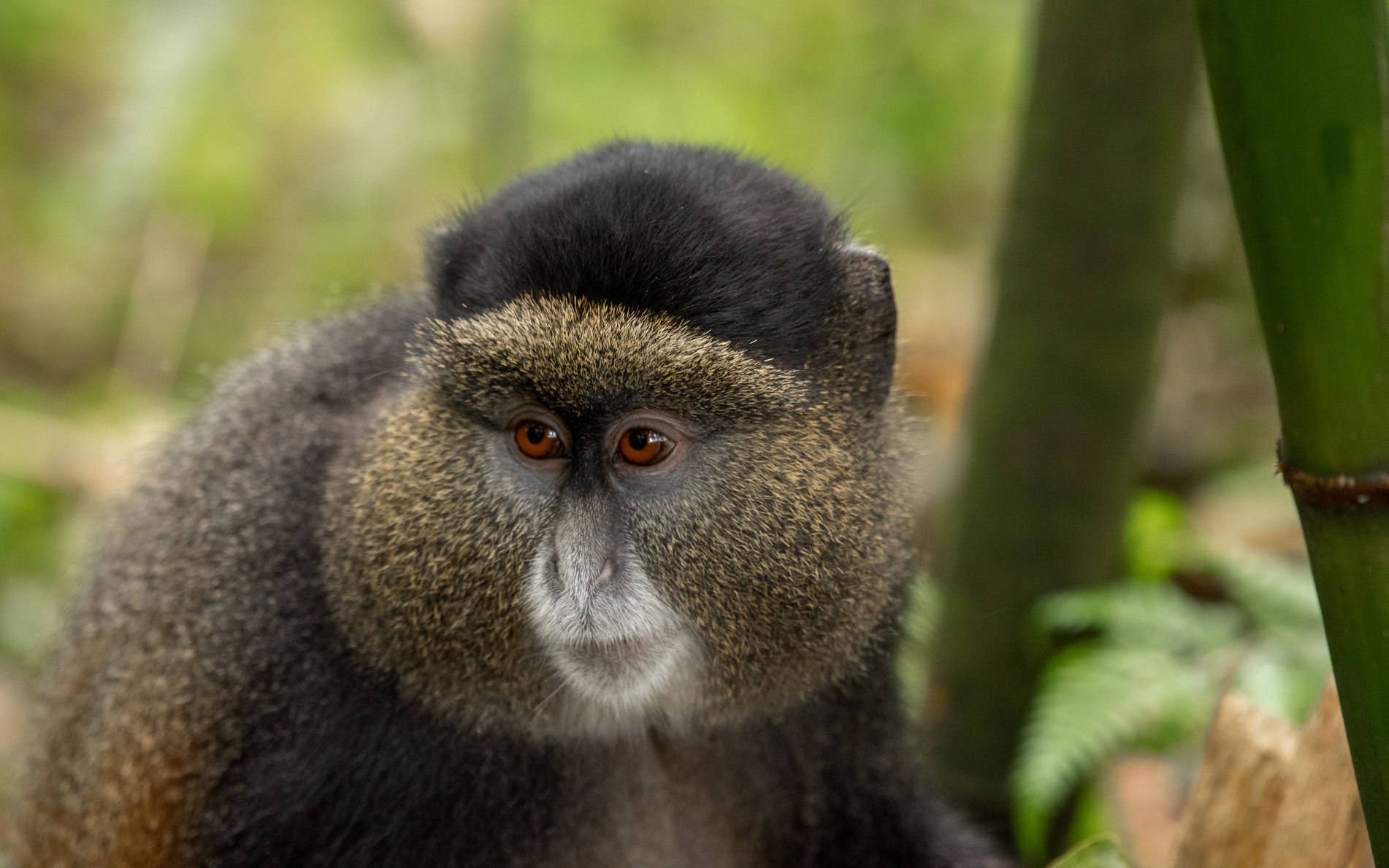
Golden Monkey in Volcanoes National - Rwanda
Birding in the Virunga Region
The Virunga region is one of the most important birding areas in East Africa. It supports over 180 recorded bird species, many of which are Albertine Rift endemics—birds that are rarely found anywhere else in the world. The park’s varied landscape, which includes montane forest, bamboo zones, open grassland, and volcanic slopes, provides ideal feeding and nesting grounds for birds.
Some of the notable bird species commonly seen or heard in this region include:
- Rwenzori Turaco – A striking and colourful bird often seen gliding between tall forest trees. Its loud calls usually reveal its presence before it is spotted.
- Kivu Ground Thrush – A shy forest bird that prefers dense undergrowth and is best seen during quiet morning walks.
- Strange Weaver – Known for its unusual nesting behaviour and bright yellow plumage, making it a favourite for bird photographers.
- Archer’s Robin-Chat – A beautiful forest bird with rich colours and a melodious call, often found in shaded woodland areas.
- Double-collared Sunbirds – Small, fast-moving birds with shining metallic colours, commonly seen feeding on flowers.
Best Time for Birding in Volcanoes National Park
Birding in Volcanoes National Park is best done early in the morning, when birds are most active and vocal. The calm atmosphere at dawn makes it easier to spot birds as they move through the forest canopy and bamboo thickets. Afternoon walks can also be rewarding, especially in open areas and forest edges.
Guided Birding Walks
Birding is enjoyed through guided nature walks led by experienced local guides who understand bird calls, movements, and habitats. These walks pass through bamboo forests, montane woodland, and forest clearings, offering excellent opportunities to see both common and rare species. Whether you are an experienced birder or a beginner, the guides help make the experience educational and enjoyable.
Monkey Encounters During Birding
While birding, visitors often encounter monkey species such as golden monkeys and blue monkeys. These primates move freely through the forest and bamboo zones, adding excitement to birding walks. Watching monkeys feeding, jumping between trees, and interacting naturally in the wild complements the overall wildlife experience.
Birding in Volcanoes National Park offers a peaceful alternative to more physically demanding activities like gorilla trekking. It is ideal for nature lovers, photographers, and travelers who want to explore the park at a relaxed pace while enjoying the rich birdlife and playful monkeys of the Virunga ecosystem.
This combination of birds, monkeys, dramatic volcanic scenery, and expert guiding makes birding in the Virunga region a truly memorable experience.
Gorilla Trekking Experience in Volcanoes National Park, Rwanda
Gorilla trekking in Volcanoes National Park is one of the most powerful wildlife experiences in Africa. It offers a rare chance to meet mountain gorillas in their natural forest home while learning about conservation and community protection. The experience is well organised, safe, and guided by professional rangers, making it suitable for travellers with a reasonable level of fitness.
Early Morning Start at Kinigi Park Headquarters
The gorilla trekking day begins very early in the morning at the Kinigi Park Headquarters, located at the foot of the Virunga Volcanoes. Visitors arrive before sunrise to register and prepare for the trek. During this time, park rangers provide a detailed briefing covering trekking rules, safety measures, and expected behaviour around the gorillas.
You are also assigned to a specific gorilla family based on your fitness level and personal preference. This helps ensure a comfortable trekking experience for everyone while protecting the gorillas from unnecessary stress.
The Trek Through the Forest
After the briefing, visitors are driven to the trailhead where the trek begins. The hike leads through thick bamboo forests, open meadows, and steep volcanic slopes. The duration of the trek can vary greatly depending on where the gorillas are located on that day.
Trekking time may range from 1 to 6 hours, including the walk to and from the gorilla family. Some treks are short and gentle, while others can be more demanding with muddy paths and steep climbs. Porters are available to assist visitors who need help carrying bags or navigating difficult terrain.
Encountering the Mountain Gorillas
Once the gorilla family is located, visitors are allowed to spend one hour observing them at close range. This time limit is strictly enforced to protect the gorillas from human-related stress and possible disease transmission.
During this hour, you may see gorillas feeding, resting, grooming each other, or caring for their young. The silverback, which leads the group, often stays close, calmly watching over the family. Rangers share information about each gorilla’s behaviour, family structure, and conservation history, making the experience both educational and meaningful.
A Life-Changing Wildlife Experience
Gorilla trekking in Volcanoes National Park is often described as emotional, inspiring, and unforgettable. Standing just a few meters away from these gentle giants creates a deep connection and appreciation for wildlife conservation. Many visitors leave with a new understanding of how important it is to protect endangered species and their natural habitats.
This once-in-a-lifetime experience not only supports gorilla conservation in Rwanda but also contributes to local community development, making your visit both rewarding and impactful.
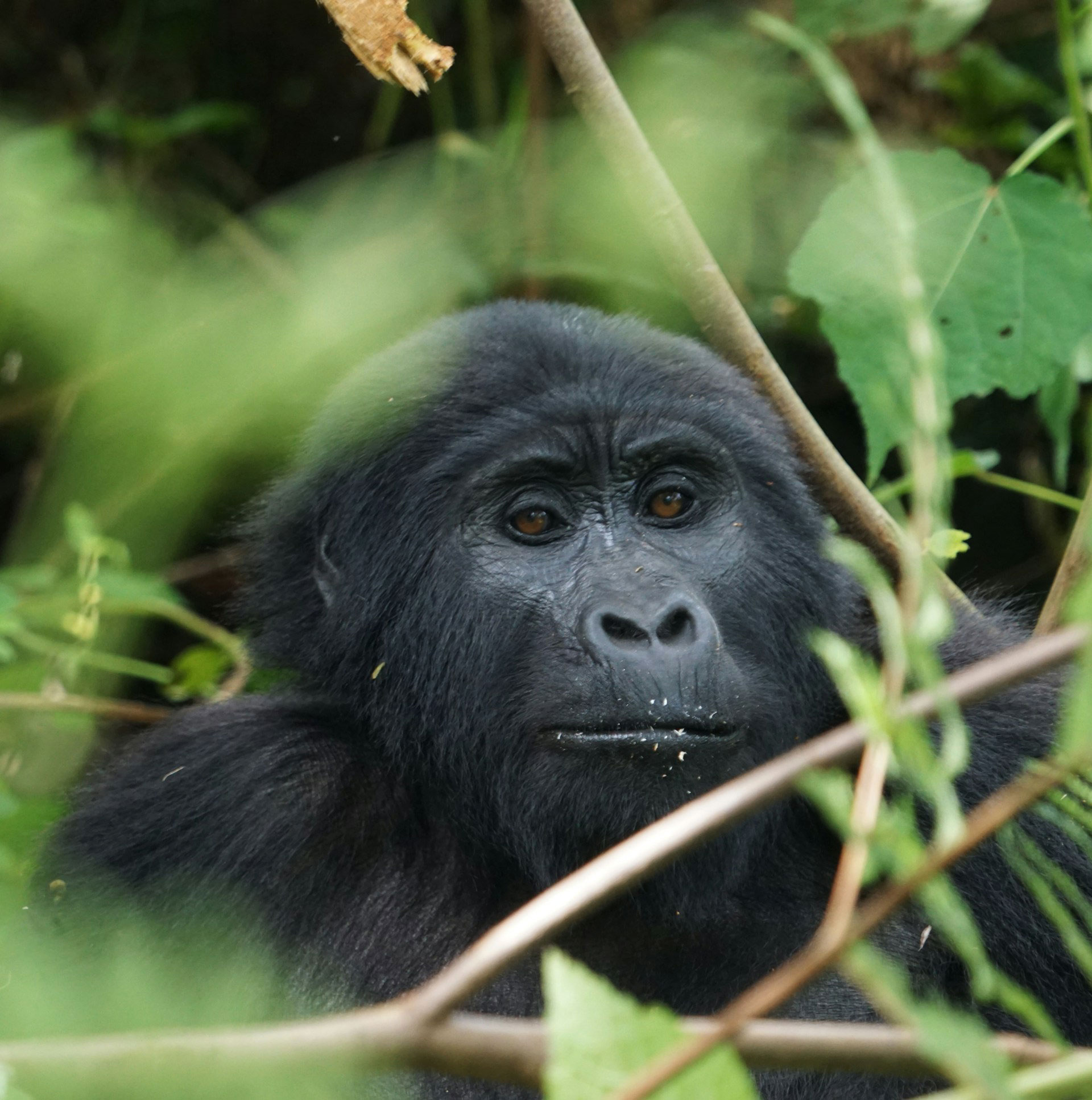
VOLCANOES NATIONAL PARK, RWANDA
Gorilla Permit Cost in Volcanoes National Park, Rwanda
Gorilla trekking in Volcanoes National Park is a once-in-a-lifetime wildlife experience, and to take part in this activity, every visitor must have a valid gorilla trekking permit. This permit is issued by the Rwanda Development Board (RDB) and is strictly regulated to protect the endangered mountain gorillas and their natural habitat.
Cost of a Gorilla Trekking Permit in Rwanda
The cost of a gorilla trekking permit for Volcanoes National Park is USD 1,500 per person. This fee applies to both foreign residents and international visitors. Although the price may seem high, it reflects Rwanda’s strong commitment to conservation, sustainable tourism, and community development.
What the Gorilla Permit Covers
The gorilla trekking permit is comprehensive and covers several important services and contributions:
- Park Entry Fees
- The permit grants you official access to Volcanoes National Park on the day of your trek. You do not need to pay any additional entrance fees.
- Professional Ranger Guides and Security
- Each trekking group is led by experienced park rangers who ensure your safety and guide you through the forest. Armed rangers are also present to protect both visitors and gorillas.
- One Hour with the Mountain Gorillas
- Once you locate a habituated gorilla family, you are allowed to spend a maximum of one hour observing them in their natural environment. This limited time helps reduce stress on the gorillas while still offering a meaningful and unforgettable encounter.
- Conservation Support
- A large portion of the permit fee goes directly toward gorilla conservation efforts. This includes veterinary care, habitat protection, and ongoing research to ensure the long-term survival of mountain gorillas.
- Community Development Contribution
- Part of the permit cost supports local communities living around the park. Funds are used to improve schools, health centers, and infrastructure, helping communities benefit directly from tourism and encouraging conservation support.
Permit Availability and Advance Booking
Gorilla trekking permits in Volcanoes National Park are limited to a small number per day to protect the gorillas and their habitat. Because of high demand, especially during the peak seasons (June to September and December to February), permits should be booked several months in advance. Last-minute availability is rare.
Other Permits in Volcanoes National Park
Activities such as golden monkey trekking and bird watching require separate permits. These permits are significantly cheaper than gorilla permits and are ideal for travellers looking for additional wildlife experiences or more budget-friendly options.
Best Time to Trek in Volcanoes National Park, Rwanda
Gorilla trekking in Volcanoes National Park is possible all year round, but some seasons are more favourable.
Best Months (Dry Seasons)
- June to September
- December to February
During these months, trails are drier, trekking is easier, and visibility is better.
Wet Seasons
- March to May
- October to November
Rain makes trails muddy and challenging, but the forest is greener and less crowded. Some travelers prefer this period for photography and lower visitor numbers.
Volcanoes Gorilla Trekking Packages 2026 - 2027
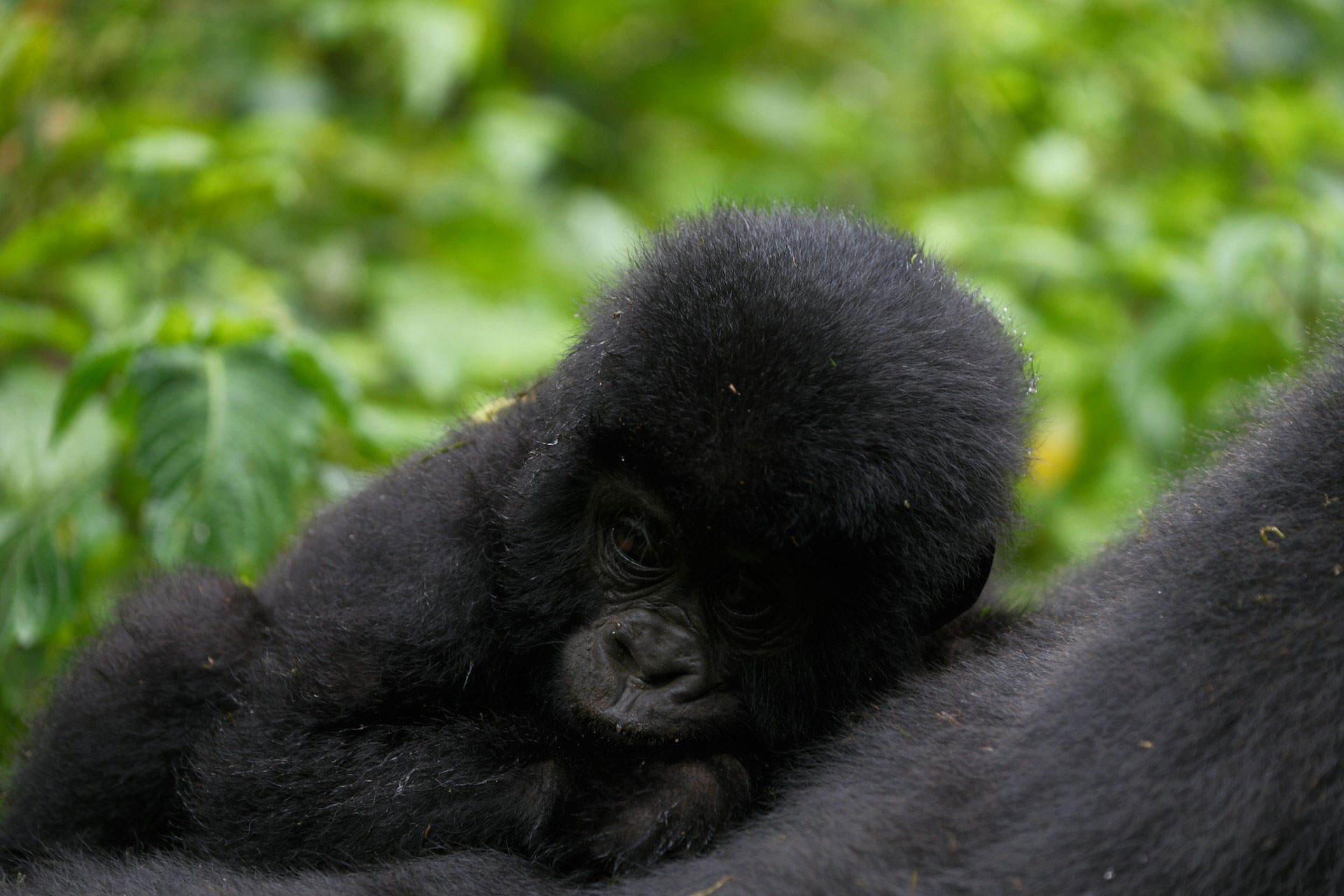
Frequently Asked Questions about Volcanoes National Park
Is gorilla trekking in Volcanoes National Park guaranteed?
Yes, the success rate of seeing gorillas is over 98%, making it one of the most reliable trekking destinations in Africa.
How difficult is gorilla trekking in Volcanoes National Park?
The trek ranges from moderate to challenging depending on the gorilla group and weather conditions.
How many people trek one gorilla family per day?
Only 8 visitors are allowed per gorilla family per day.
Can children trek gorillas in Rwanda?
The minimum age for gorilla trekking is 15 years.
How far is Volcanoes National Park from Kigali?
The park is about 2.5 to 3 hours’ drive from Kigali International Airport.
Copyright © 2026 Explore Virunga Gorillas - Brand By Robylinks Solutions